How a PCR Generates Revenue
You now know why the parts department matters, and you know what makes you valuable as a PCR. Now let's get into the actual work: how you keep revenue flowing through your parts counter and what you need to know to keep it moving.
Two Channels, One Job
Revenue reaches your counter through two main channels:
You already know the first one: customers contact you directly. They call, walk in, or reach out online because they need a part. This is the part of the job most people picture when they think of a parts counter.
But at many dealerships, 50% or more of all parts revenue comes from inside the building. Your service department is your biggest customer. Technicians and service managers need parts to complete repairs in the bay and in the field. The speed and accuracy of your response directly affects their ability to get the work done, bill for it, and get the machine back to the customer.
Both channels represent revenue flowing through your counter, and both represent a customer whose operation depends on getting the right part at the right time. The person on the phone is your customer. The tech standing behind your counter with a work order in their hand is also your customer, and behind that tech is an end customer waiting on their machine.
When you see both channels clearly, every request that reaches your counter carries the same weight because every part, no matter where it originates, represents a customer whose operation depends on it.
What Every Transaction Needs
No matter which channel a request comes through, every transaction comes down to four pieces of information your customer needs to make a decision:
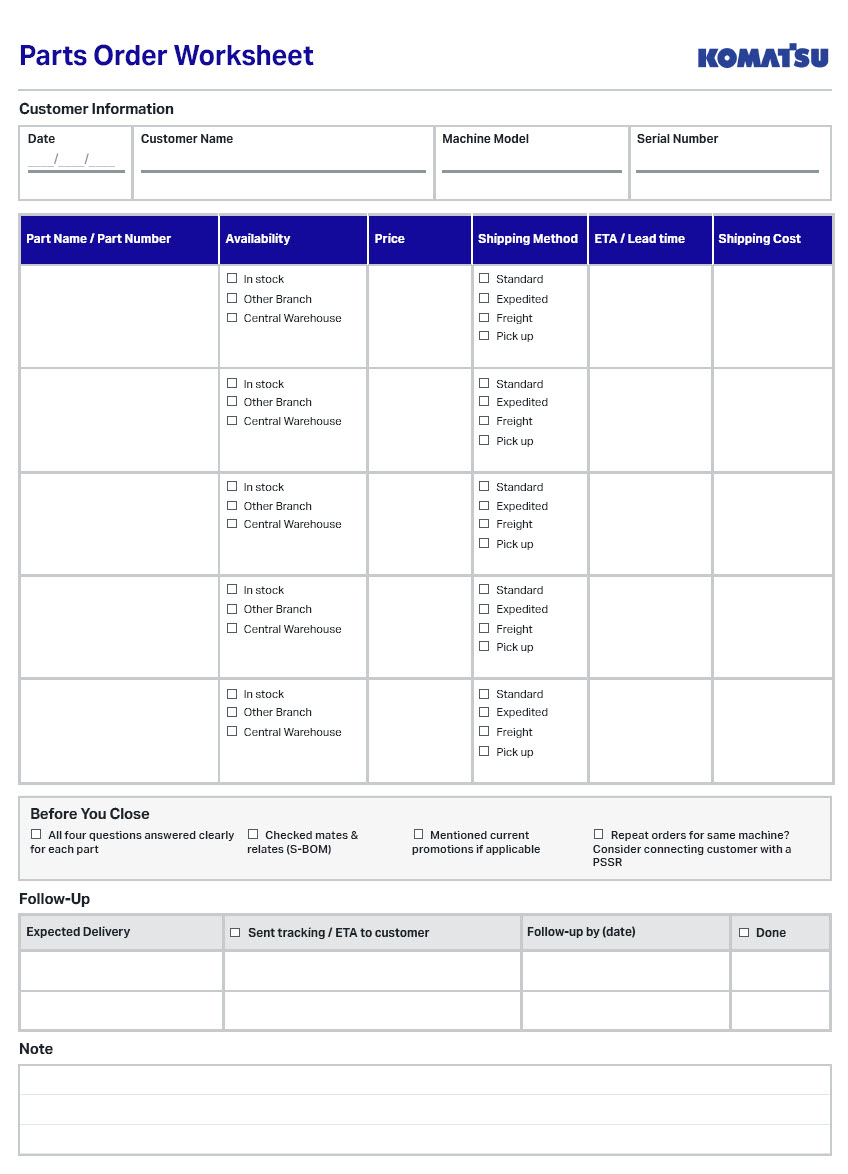
- What's the availability? Is the part in stock at your branch, available at another branch in the network, or does it need to be ordered from the central parts warehouse? Your customer's timeline depends on this answer.
- What does it cost? List price, customer-specific pricing, contract rates, any current promotions. Your customer needs to know exactly what they're paying.
- How long will it take? Lead time from order to delivery: hours, days, or weeks? Each means something different to a customer whose machine is down versus one planning scheduled maintenance.
- What will shipping cost? If the part isn't on your shelf, what are the delivery options? Standard, expedited, freight: your customer has to balance both cost and speed against their budget and operational needs.
When you can answer these four questions quickly and confidently, you're giving your customer everything they need to make the best decision for their operation. And when a customer knows they can call you and get clear, accurate answers without chasing you for follow-ups, they'll remain loyal to your parts counter.
Download this Parts Order Worksheet to anchor your own thought process and workflow around answering these four questions, delivering complete and accurate information, and following up with your customers:
 Download the PDF
Think & Reveal
Think about this situation:
A service tech walks up to your counter and says they need a hydraulic pump for a PC210LC in the bay. The customer is anxiously waiting for an update.
What does the tech need from you right now so they can give the customer a realistic picture?
You need to answer the four questions:
- Availability: is it in stock? Where is it coming from?
- Cost: what is this customer's price for this part?
- Lead time: how quickly does each shipping option get the part to the customer?
- Shipping cost: how much will those shipping options cost the customer?
The tech needs all four answers to give the customer a clear timeline. If you give an incorrect or incomplete answer, decisions are being made on bad information which is going to lead to a frustrated customer and technician in the very near future.
Next, we'll look at the tools and resources Komatsu provides to help you do this quickly and accurately.