Mates & Relates
A customer calls to order hydraulic hoses for their excavator. You pull up the part, confirm the price, and place the order. Job done. They got what they asked for.
But did they get what they needed? Hydraulic hoses don't fail in isolation. If the hoses are worn, the O-rings probably are too. The hydraulic oil needs replacing; do they need to order that, too? The filters should be checked. If that customer has to call back tomorrow for a $5 O-ring to finish a repair they thought was done, that's a second call, a second shipment, and another day their machine is down.
Put yourself in your customer's shoes:
What Mates & Relates Means
When a customer orders a part, there are almost always related parts that go with it: components that wear together, consumables that should be replaced at the same time, or hardware that's needed to complete the installation. These are mates and relates.
Checking for mates and relates is not upselling or increasing the order total. It's making sure your customer has everything they need to get the repair done in one trip or shipment, and one downtime window. Customers appreciate when you've got them covered on everything they need, and they notice when you don't.
Good customer service is giving them what they ask for. Great customer service is giving them what they didn't know to ask for.
How It Works
Mates and relates follow a pattern. For any major part a customer orders, there are usually two tiers of related parts:
Probably also needs: high-confidence items that are almost always replaced alongside the primary part. When a customer orders engine oil filters, they probably also need oil and O-rings. These are the items where you'd say: "When you replace a filter, you usually also need these. Would you like to add them?"
May also need: items that are related but depend on the specific situation. For those same engine oil filters, the customer may also need an air filter or fuel filter depending on the service interval. These are the items where you'd say: "Do you remember the last time you replaced your air and fuel filters? This machine may be due for those as well. Should we double check that while we're here?"
The difference between the two tiers is confidence. "Probably also needs" are near-certainties. "May also need" are informed suggestions. Both are valuable to your customer.
Top 10 Parts Mates & Relates
Learn the mates and relates for some of the most commonly ordered parts.
Advance through the carousel and flip each card to view its front and back:
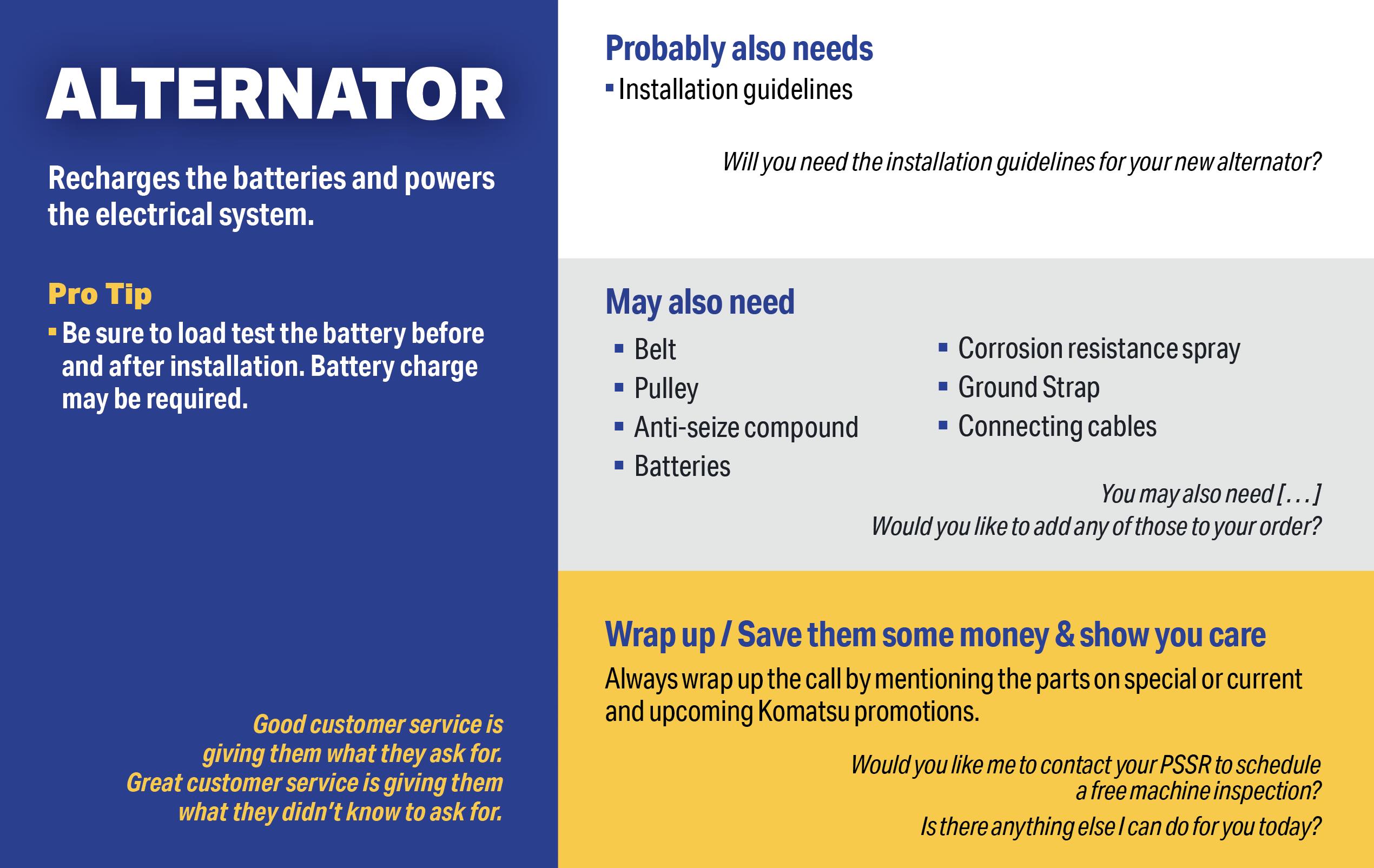
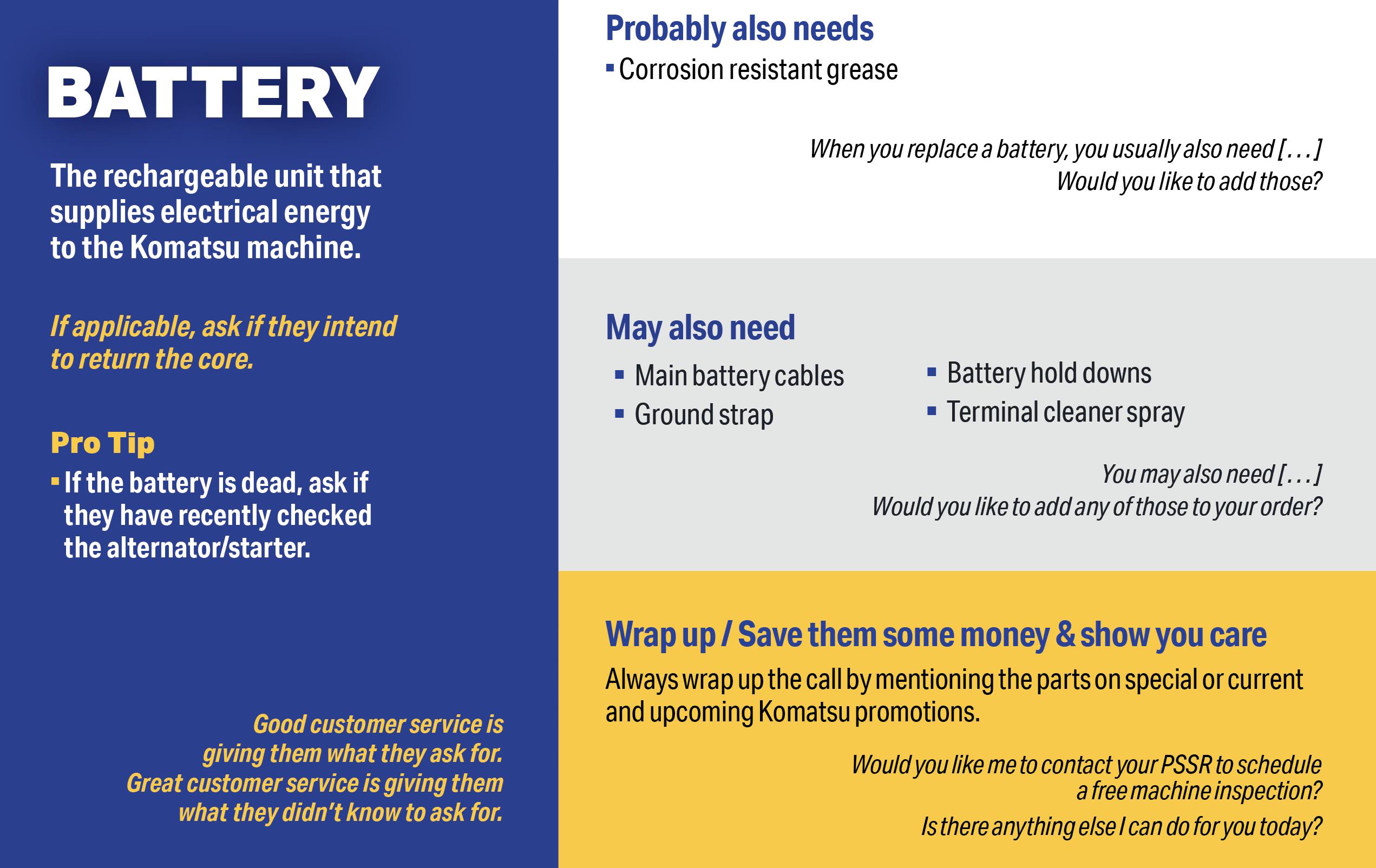

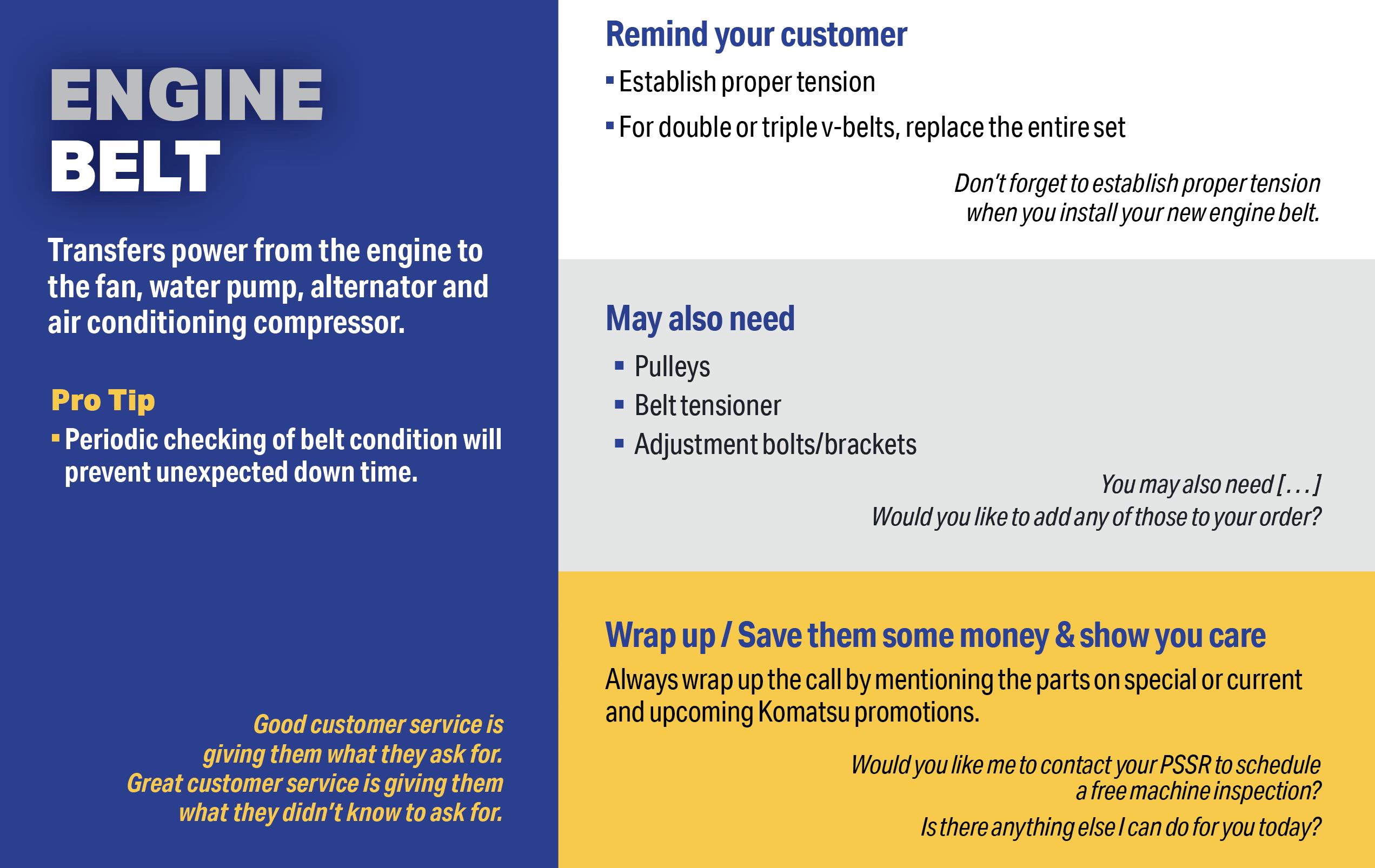
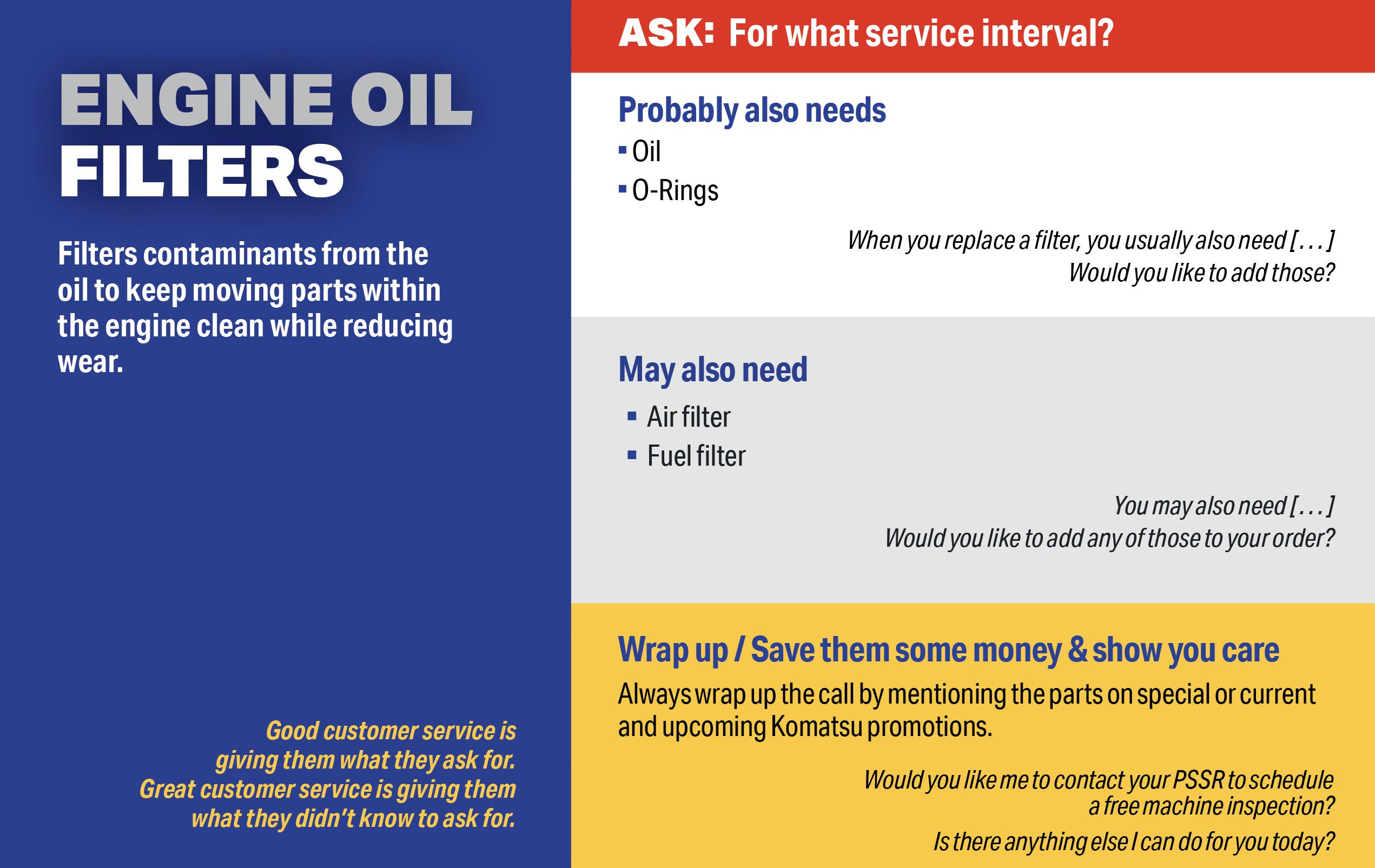
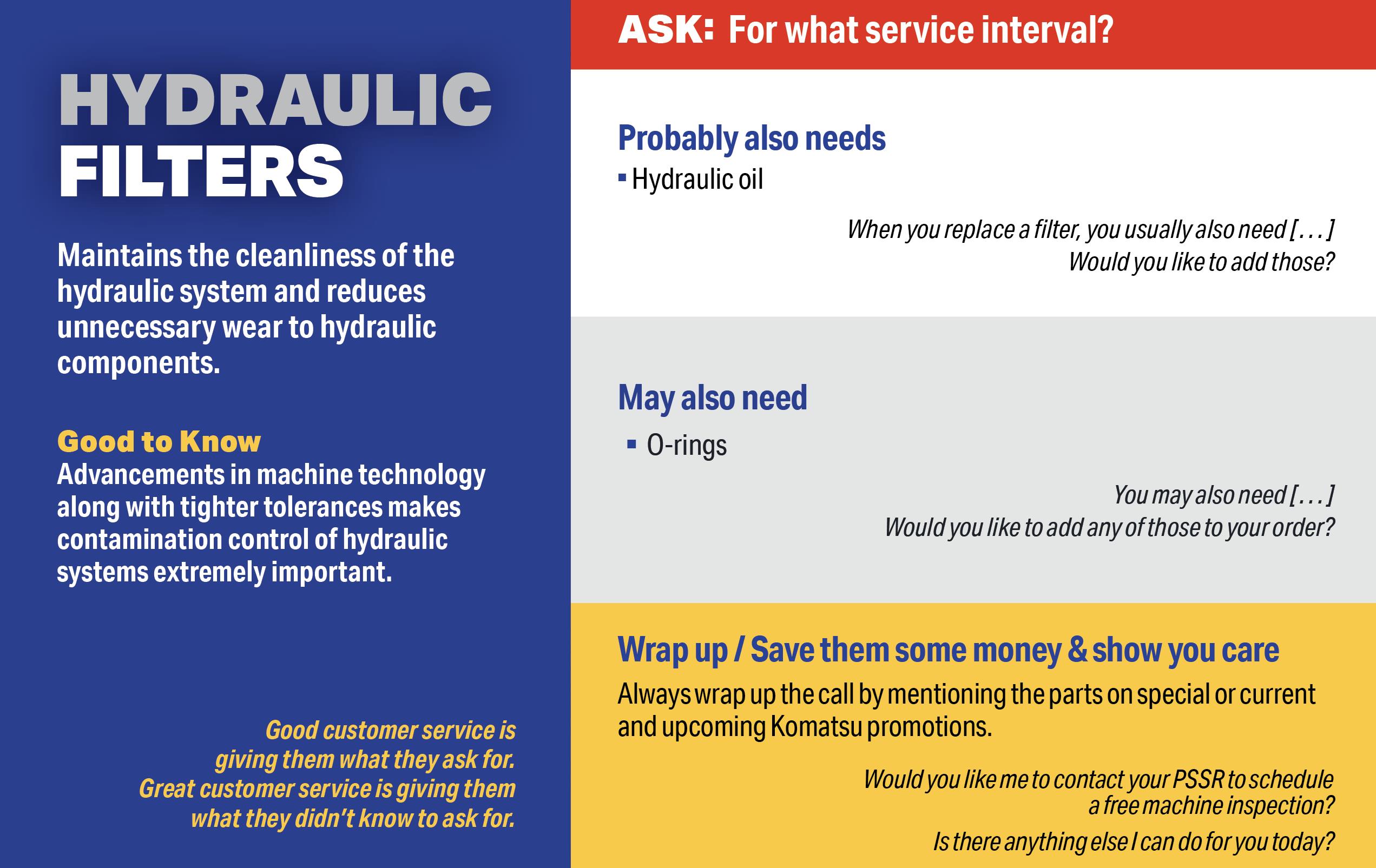
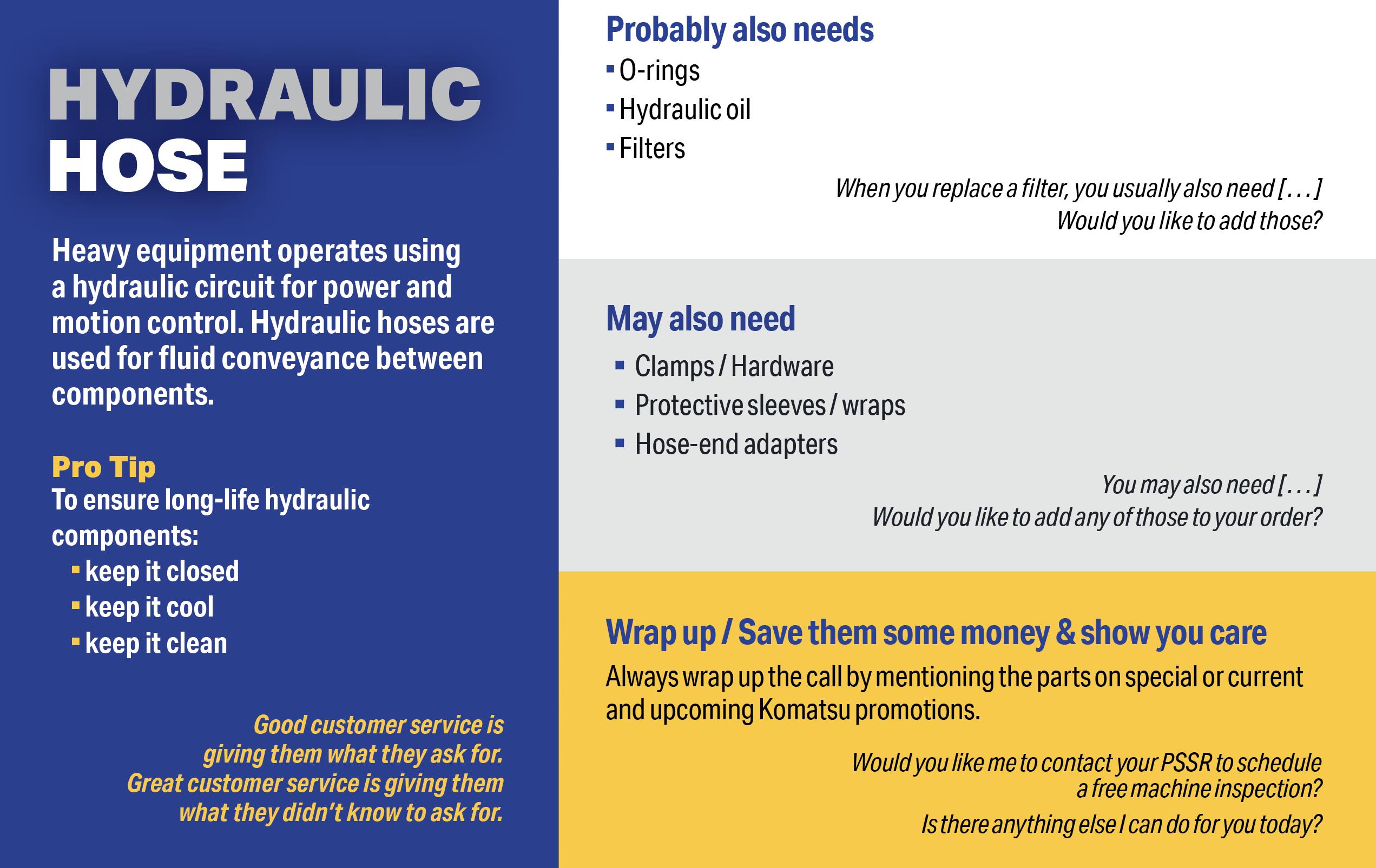
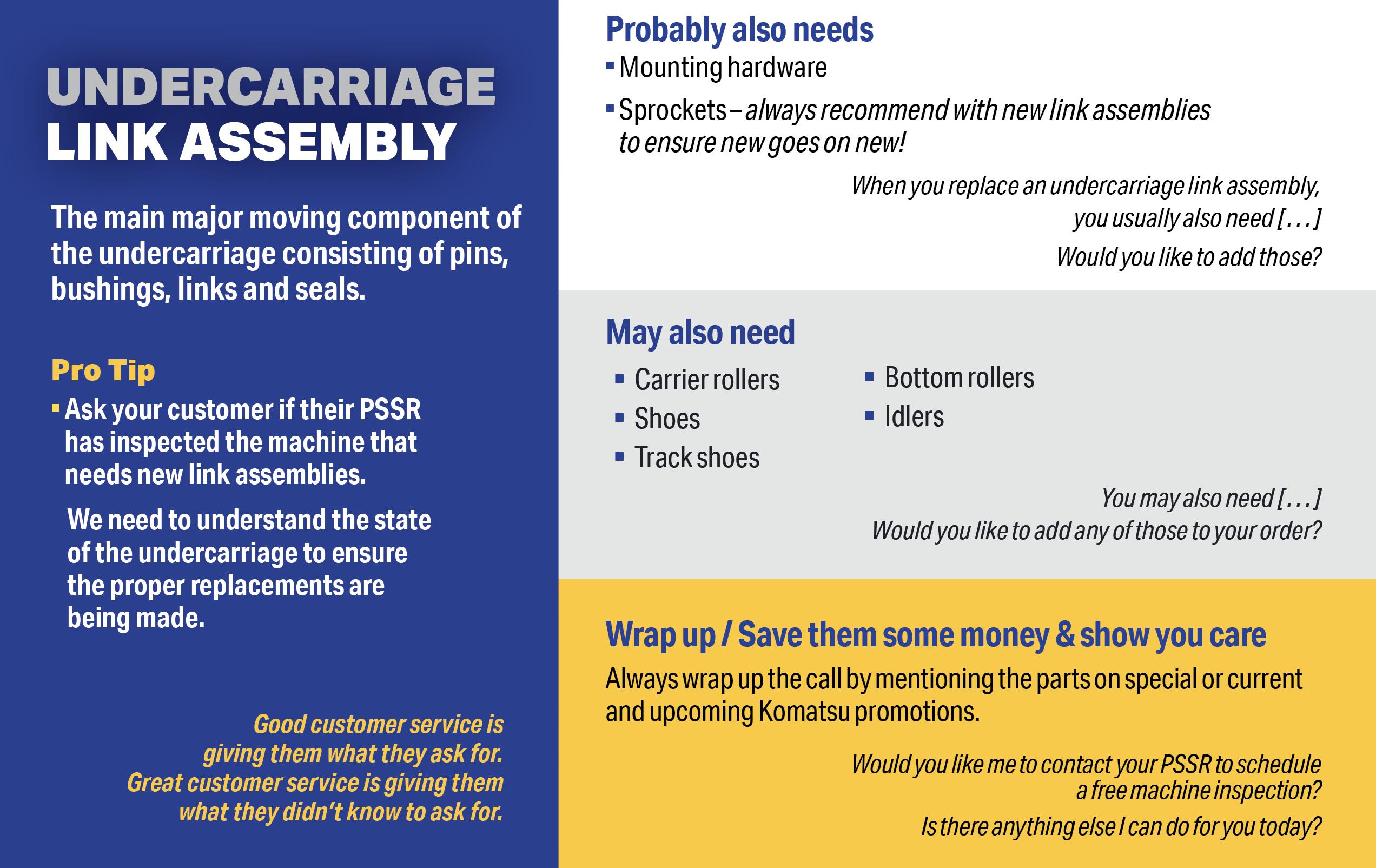
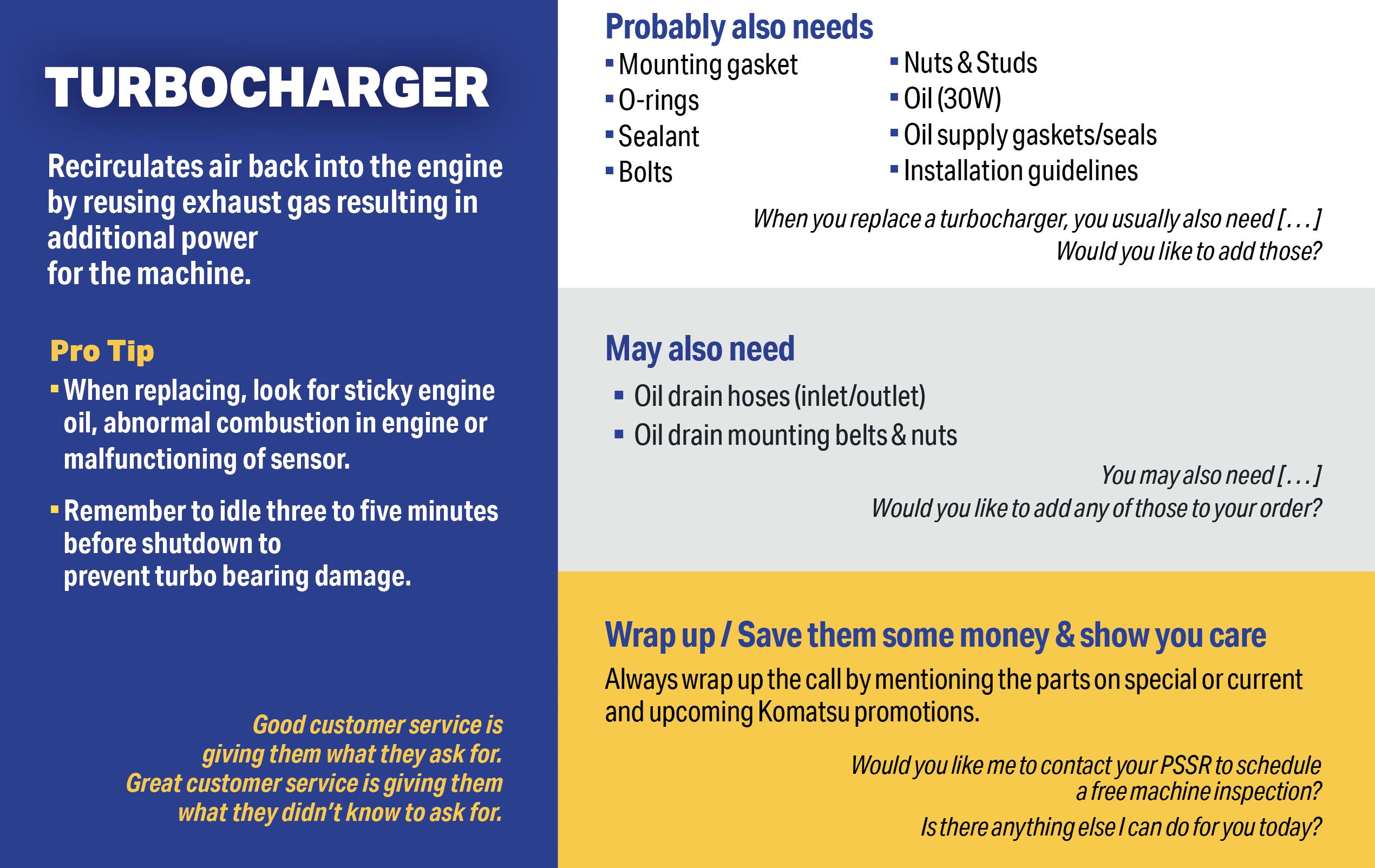
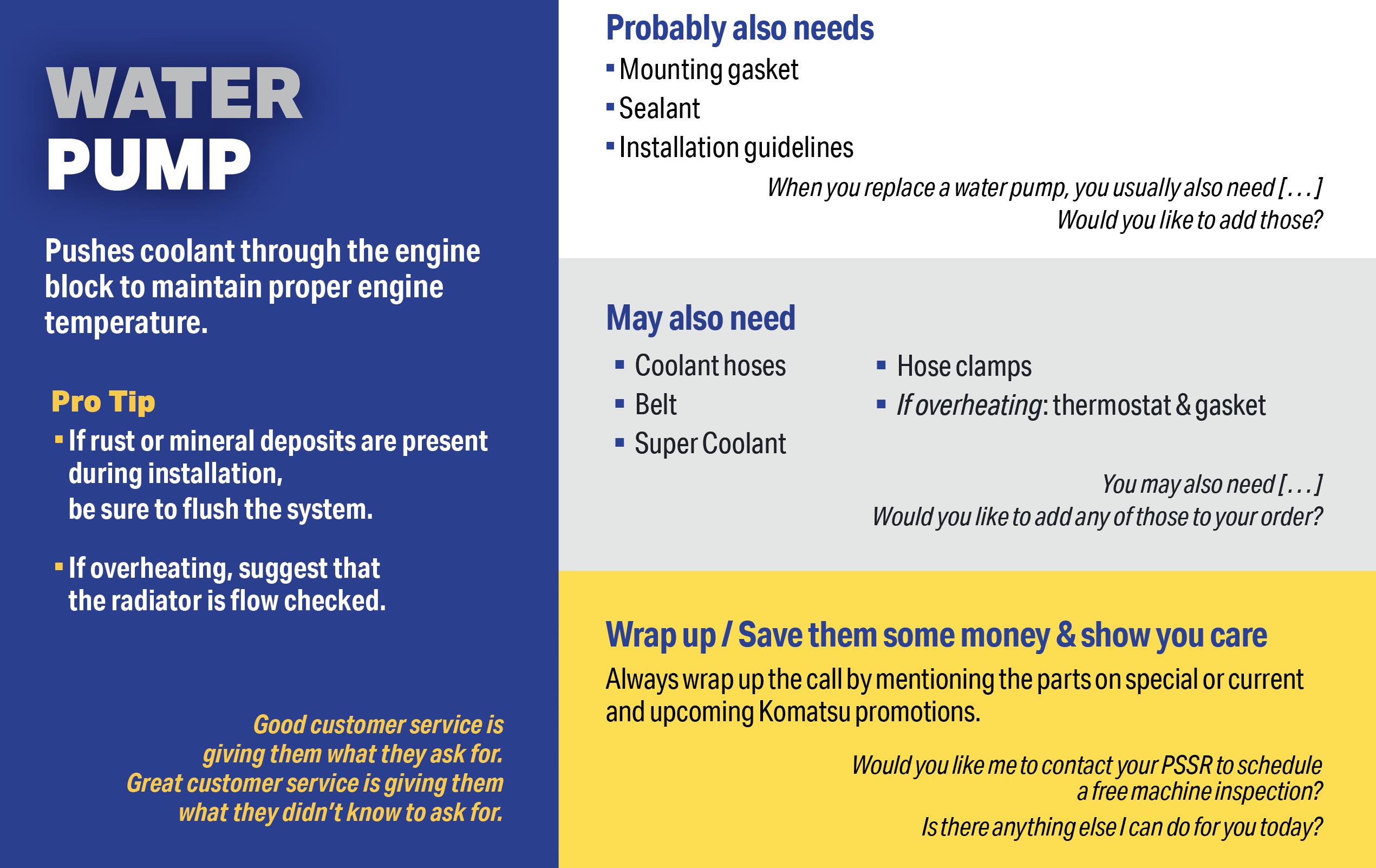
All 10 mates and relates cards are shown above. In a supported browser, these display as an interactive carousel.
Download the Mates & Relates cards PDF:
Finding Mates and Relates
You don't have to memorize every combination. In the last lesson, you learned about S-BOM that breaks down parts by machine assembly. When you're viewing a specific part in the parts list, they show you potential mates and relates for that part. The tool does the heavy lifting; your job is to check it and ask the question.
Over time, you'll start to recognize the common patterns without looking them up. Filters and O-rings. Hoses and clamps. Belts and tensioners. The more transactions you handle, the more instinctive this becomes.
Wrapping Up the Call
Every transaction is also an opportunity to close well. After you've covered mates and relates, wrap up by mentioning any current specials or promotions on the parts in the order. And if the customer seems to be ordering a lot of parts for the same machine, that's a signal: "It sounds like you're ordering quite a few parts for this machine. Would you like me to connect you with a PSSR to schedule a walkaround so we can make sure everything is covered?"
That last question is a bridge to the next lesson: how your relationship with PSSRs extends your reach beyond the counter.
Think & Reveal
Think about this situation:
A service tech submits a request for a water pump for a D65PX in the bay. The customer needs the machine back by end of week.
Consider:
- Beyond the water pump itself, what would you check before completing this order?
Check S-BOM for mates and relates on the water pump. A water pump replacement probably also needs gaskets, O-rings, and coolant. It may also need hoses, a thermostat, or clamps depending on their condition.
With a tight deadline like end of week, you want to make sure every part is in the first shipment. If the tech gets into the job and discovers a worn hose they didn't order, that's a delay that could push past the customer's deadline.
Ask the tech: "Do you want me to pull mates and relates on this so we make sure you have everything before you start?"
In the next lesson, we'll go deeper on your PSSR relationship: how it works, why it matters, and how it extends your dealership's reach into the field.