What is Your Personal Brand?
There's a question that gets asked in every dealership, every day, in dozens of small ways:
Who should I call about this?
Not "which department handles this", that's a process question. The real question being asked is, which specific person do I want to deal with?
Everyone has someone they'd rather work with, and someone they'd rather avoid. Their preferences came from experience: dozens of interactions that built a picture of who a person is, how they work, and whether they can be counted on.
That picture is your personal brand.
Your Brand Already Exists
What most people don't realize about a personal brand is, you don't get to decide whether you have one. You only get to decide whether you build it on purpose.
Every time you answer the phone, respond to a question, or handle a problem, the people around you are forming an impression. Over time, those impressions harden into a reputation. When someone says:
“Don’t bother, they never get back to you.”
That’s your brand working against you.
“Call [your name], they’ll get it handled.”
That’s your brand working for you.
The difference between the two isn't talent or personality, it's consistency.
The Compound Effect
A single good interaction doesn't build a reputation, and neither does a single bad one. Your personal brand is what people expect from you based on what you do repeatedly.
This is why professionalism isn't a personality trait or something you either have or don't.
It's a set of habits that compound over time:
- Returning calls when you say you will, every time, not just when it's convenient
- Giving accurate information even when it means saying "I don't know yet, let me find out"
- Communicating changes before someone has to ask
- Being organized enough that nothing falls through the cracks
The people who build strong professional reputations aren't doing anything that others can't do, they're just doing the ordinary things reliably enough that people stop worrying.
Take Ownership of Your Brand
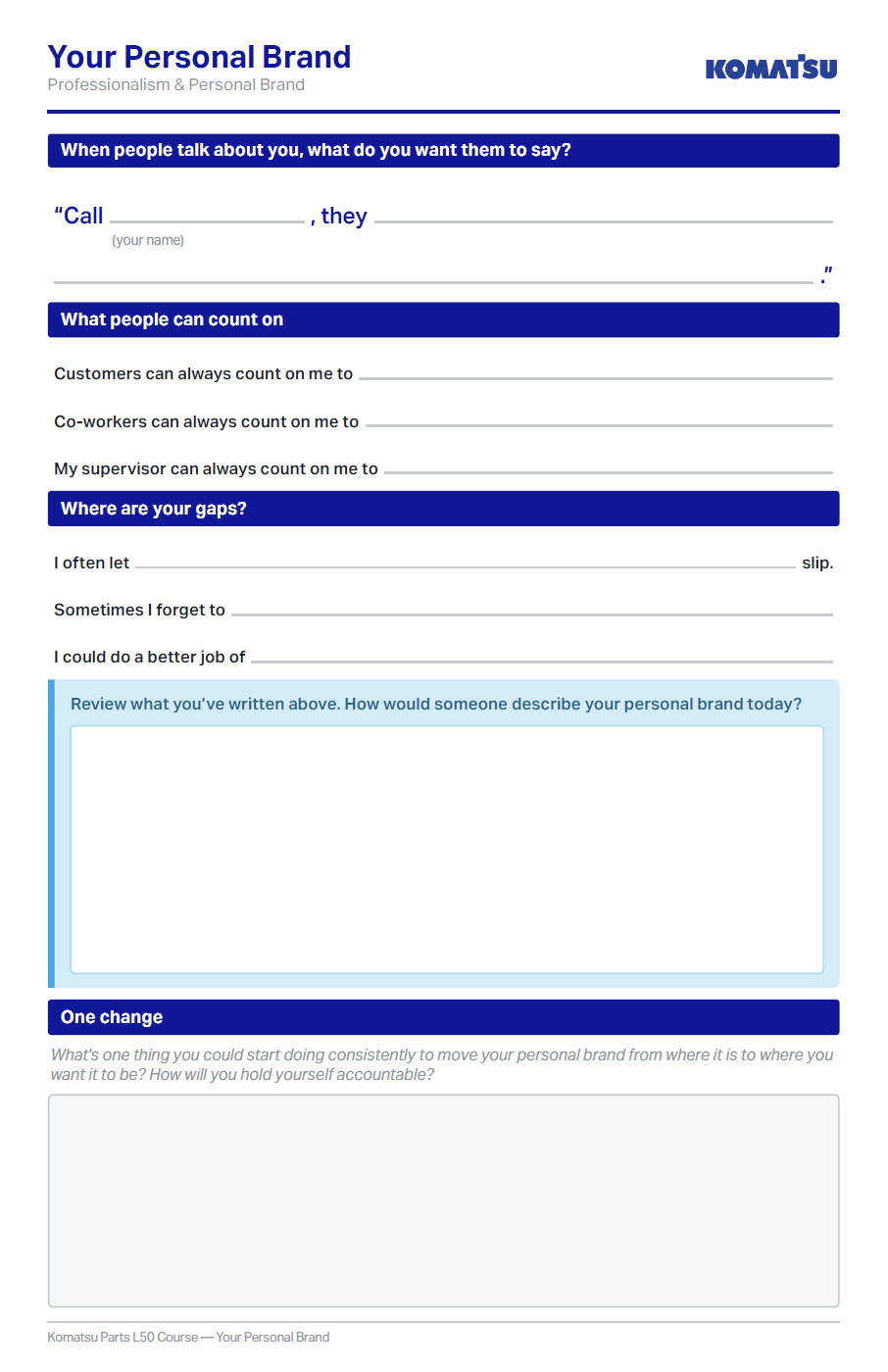
Take a few minutes with the worksheet below to discover what your current personal brand is, think through what you want it to be, and understand what it will take to bridge the gap:
Now that you understand what a personal brand is and how it forms, the next lesson gets practical: the organizational habits that help you deliver on your commitments consistently.