Organizing Yourself for Consistency
Most communication mistakes made at a dealership don't come from not knowing the answer, but from losing track of the question.
A customer asked you a question that you didn't have the answer to. You told them you'd find out and call them back in the morning, but the next morning hit you hard and fast, and by 2 PM that callback had slipped completely. The customer called back at the end of the day, annoyed.
This is not a knowledge problem, it's an organization problem. And it's a problem that will erode your professional reputation one missed commitment at a time.
Why Organization Is a Professional Skill
It's easy to think of organization as a personal preference: some people are naturally tidy, others aren't. But in a dealership environment where you're managing multiple customers, requests, and commitments at the same time, it's no longer a matter of preference or personality.
Your organization is the infrastructure that makes everything else you do reliable.
You can have the best customer and co-worker rapport in the building, and still damage your reputation if things regularly fall through the cracks. The people who are known for consistent follow-through aren't necessarily smarter or more experienced, they've just created good systems that work for them.
Build Systems, Not Intentions
-
Capture everything immediately
When a commitment is made, write it down in the same place every time. The format matters less than the habit: if it’s not captured, it doesn’t exist.
-
Work from a list, not from memory
Start each day with one place where everything that needs your attention is visible. When something new comes in, it goes on the list; when it’s done, it gets checked off.
-
Close loops before they age
An open commitment is like a slow leak: it doesn’t feel urgent until the damage is done. If it’s still open, it should still be in front of you.
-
Reset daily
The only system that works is the one you consistently maintain. Before you leave, review what’s still open, update your list, and set up tomorrow.
Your Workspace Signals Your Brand
Your physical workspace (your desk, your truck, wherever you do business) communicates something to every person who sees it. A cleanly organized counter or desk tells a customer: this person has their work under control. A disorganized work area with paperwork piling up and no clear system in sight tells them something different.
More importantly, can you find what you need within seconds? Can a coworker cover your station and figure out where things stand? Can a customer see that their request is in capable hands? Your workspace is a visible expression of how your mind is functioning. Put solid mental systems in place and your workspace will match it.
Setup Your System in 5 minutes
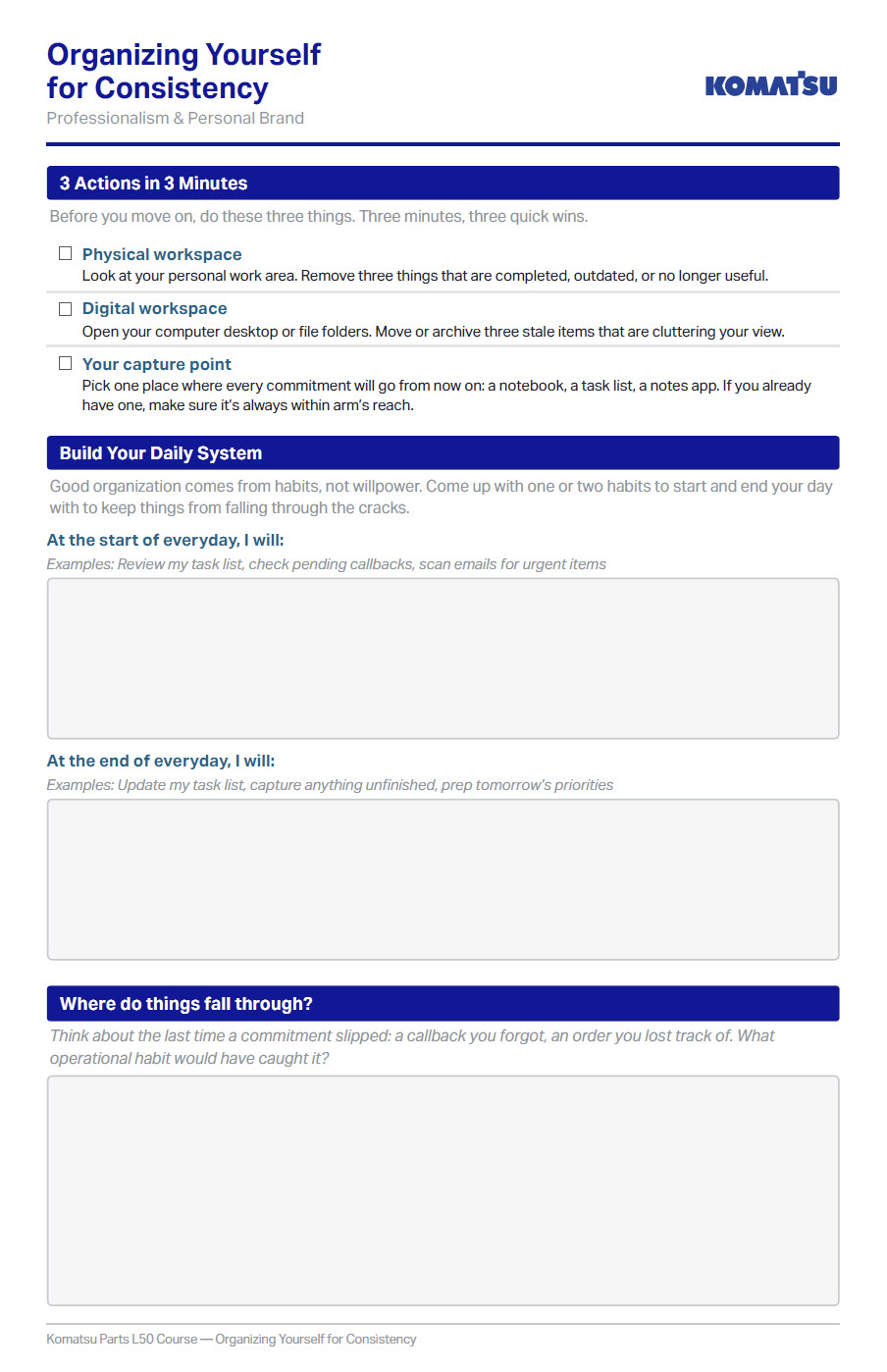
Use the worksheet below to take stock of your current habits and commit to a few systems that will keep things from slipping.
Organization keeps your commitments from slipping. The next lesson is about what those kept commitments build over time: trust.